Bodycams on the front line of sea rescue for KNRM
How Stream My Event and Zepcam built a nationwide bodycam system to capture the KNRM's rescues, from custom 3D-printed mounts to on-premise hosting.
Introduction
Most people know Stream My Event for what happens in front of the camera: studio talkshows, hybrid events, the kind of multi-camera livestream that has to run without a hitch the moment it goes live. Less visible is the other half of the work, where we build video systems for places no off-the-shelf product was ever designed for. We've pulled a live signal back from the middle of the Pacific for The Ocean Cleanup and from the Australian outback for a solar racing team. The KNRM project belongs in that same category, and it's one of the harder capture jobs we've taken on.
The KNRM, the Koninklijke Nederlandse Redding Maatschappij, has been saving lives at sea for two hundred years. It runs around 45 rescue stations along the Dutch coast and inland waters, staffed by roughly 1,400 volunteers, with a fleet of about 75 lifeboats. Every year its crews launch to thousands of call-outs and help more than 3,500 people. The organisation receives no government money and is funded entirely by its donors. When the Coast Guard sounds the alarm, a lifeboat is expected to be on the water within ten minutes.
What they asked us for sounded straightforward: good footage of real rescues, captured consistently across the whole organisation. Choosing a camera took an afternoon. Making it work in their world took rather longer.
The operational reality
A rescue can't be planned. It happens on any day, at any hour, with no warning, and the moment it starts everyone involved has one job, which is not filming. Crews work in heavy survival suits built to keep a person alive in open water until a helicopter can lift them out. That is the environment our equipment has to survive and the bar it has to clear.
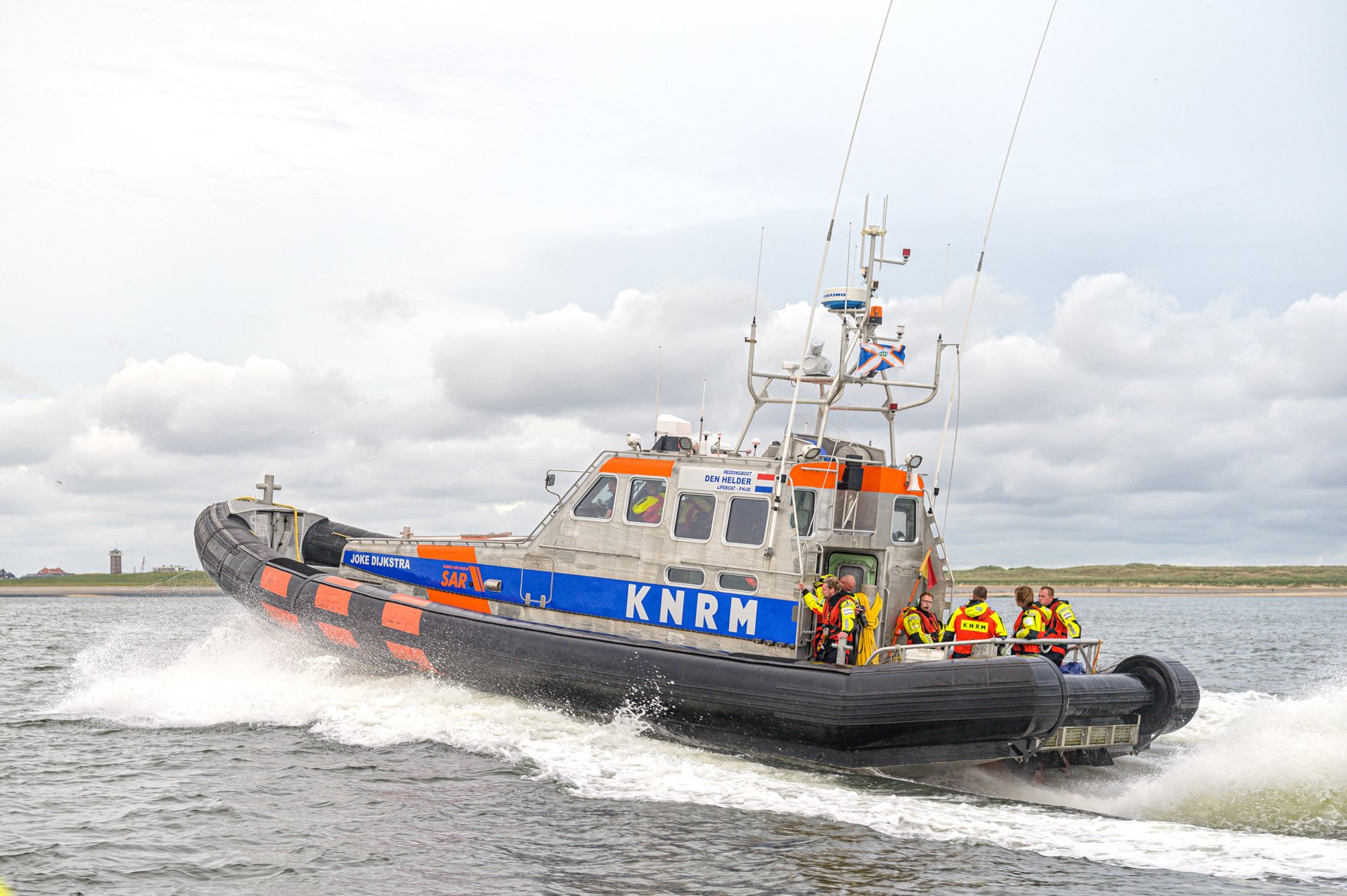
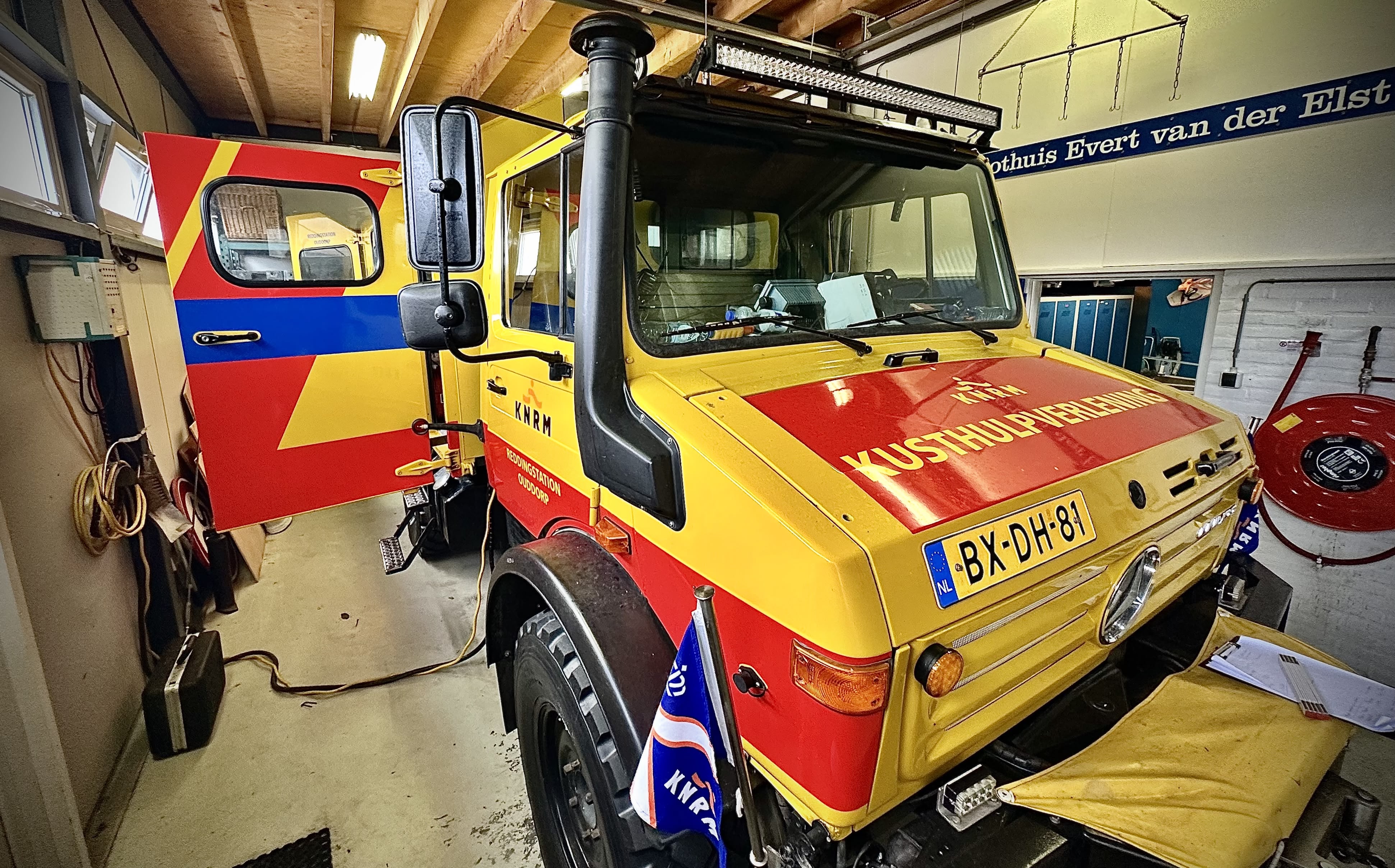
Then there's the variety. This is a national network of stations spread along the North Sea coast and the inland waters, each with its own crews and its own connectivity. The fleet runs from five-metre inflatables that launch straight off the beach to nineteen-metre all-weather lifeboats that go out in almost anything, and it isn't only boats. The coastal stations also run heavy rescue trucks, long built on the Mercedes Unimog, that work the beaches and the dunes. Some stations sit on busy stretches of coast; others are properly remote.
So the first design rule, and the hardest, was that the capture system had to stay out of the way completely. It couldn't add time to a launch, couldn't ask anyone to make a decision in the middle of an action, and couldn't depend on a crew member remembering to switch something on. Whatever we built had to look after itself.
The right camera, the right partner
Body cameras were the natural tool for the job, and the right partner to build it with was Zepcam, a Dutch company that has spent years making mobile video for frontline professionals and whose cameras are used by police forces and other first responders in dozens of countries. They make hardware for rough use: weather-sealed, durable, with on-device recording, GPS, and a pre-record buffer that keeps the seconds before someone hits record.
The footage is encoded to H.264 and encrypted on the device itself, so it leaves the station already compressed and secured. That keeps the data volumes sensible and the chain of custody tight. The cameras only roll when there's an action; they aren't recording all day.
Zepcam normally runs everything through their own managed cloud. For this project, we did it differently.
Engineering the mounts
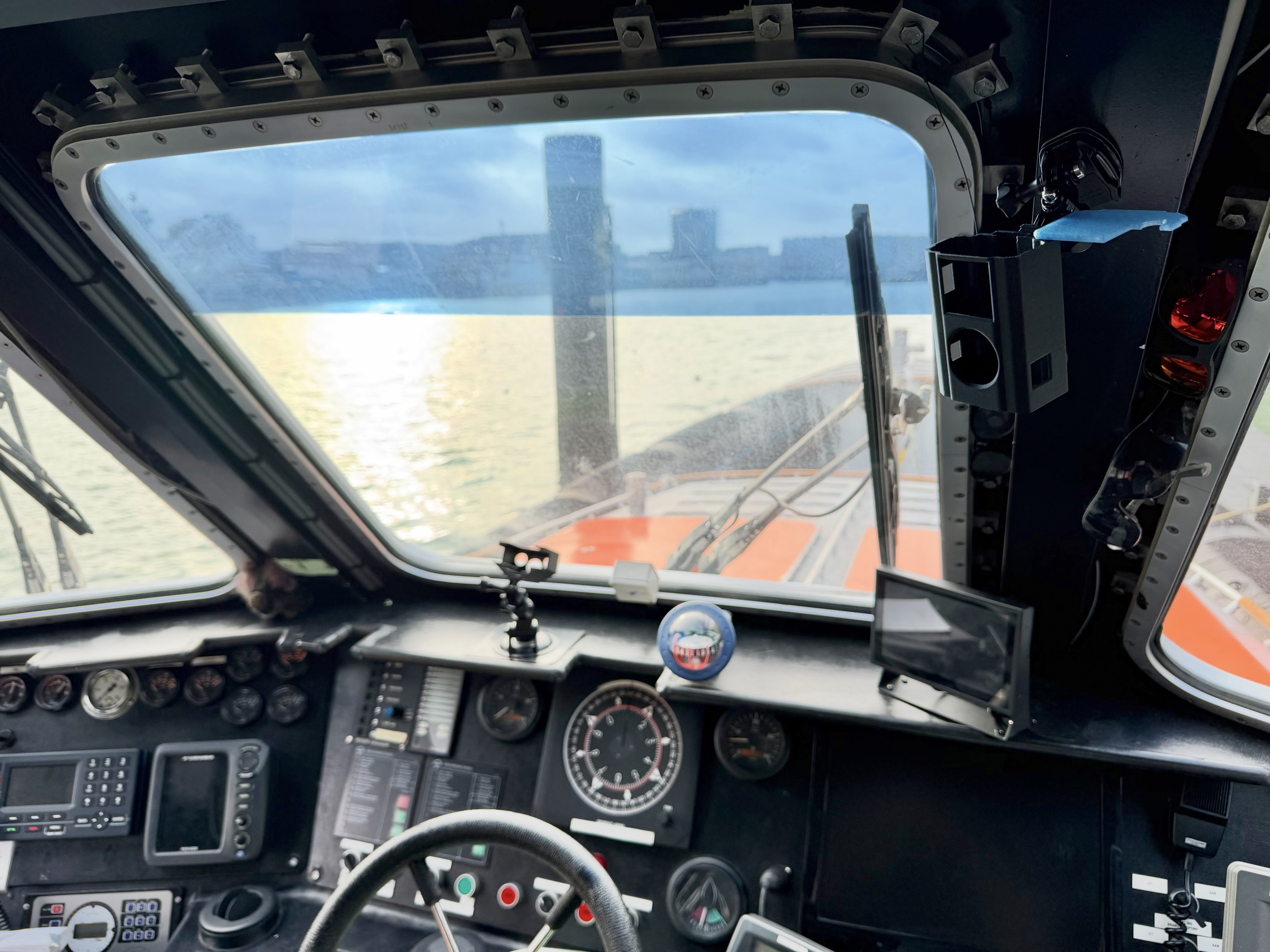
A surprising amount of this project was physical. Alongside attaching cameras to the crews' survival suits, which took its own round of trials to find something secure that never gets in the way of the suit's job, we designed and 3D-printed a family of custom mounts to fit cameras across the KNRM's vehicles.
The variety is the difficulty. A mount that suits a five-metre inflatable is no use on a nineteen-metre all-weather boat, let alone in the cab of a Mercedes Unimog rescue truck. Many of these mounts also sit inside closed cabins, which behave like sealed boxes: park one in the sun and the heat has nowhere to escape, so the inside gets very hot. The parts had to survive that heat and constant UV, which ruled out ordinary plastics and pushed us toward an engineering resin that is harder to print but doesn't warp or yellow.
We're about fifteen iterations in and still going. Every few months a new revision goes into the field, shaped by feedback from the crews, who are practical people and often arrive at improvements before we do. The change that helped most was adapting the cameras to a GoPro-style mount, which opened up the whole GoPro accessory range. Instead of designing every bracket from scratch, we can reach for proven parts and save the custom work for the problems that are specific to the KNRM.
The pipeline: on-premise, by design
Rather than route the footage through a third-party cloud, we host the KNRM's server on our own premises. It flows straight into our post-production environment and onto the same backed-up storage system we use for every project, with around 700 terabytes of capacity behind it.
The reasons were control, security, and a clean handoff to our editors. It also answers the question every client eventually asks about sensitive material: the footage stays on our own infrastructure, arrives encrypted, gets backed up, and ends up exactly where the edit team needs it.
The system is deliberately patient. Recording is triggered by an action, and uploads happen afterwards, in the background. Depending on how much was shot and what connection a station has, footage can take anywhere from a few hours to a few days to arrive: a wired connection when a camera is docked, Wi-Fi when a unit is out, and satellite or 4G for the stations where nothing else reaches. We're happy to wait. The only thing that actually matters in the field is that the camera's own buffer never fills up, and the whole design is built around that one guarantee. Connectivity is the part that differs most from one station to the next, and the system is built to live with it.
Running it at scale
A setup this spread out depends on good support, which we learned quickly. In the early months, every broken clip, swapped device, and field question arrived through a different channel and got lost. So we built a ticketing system.
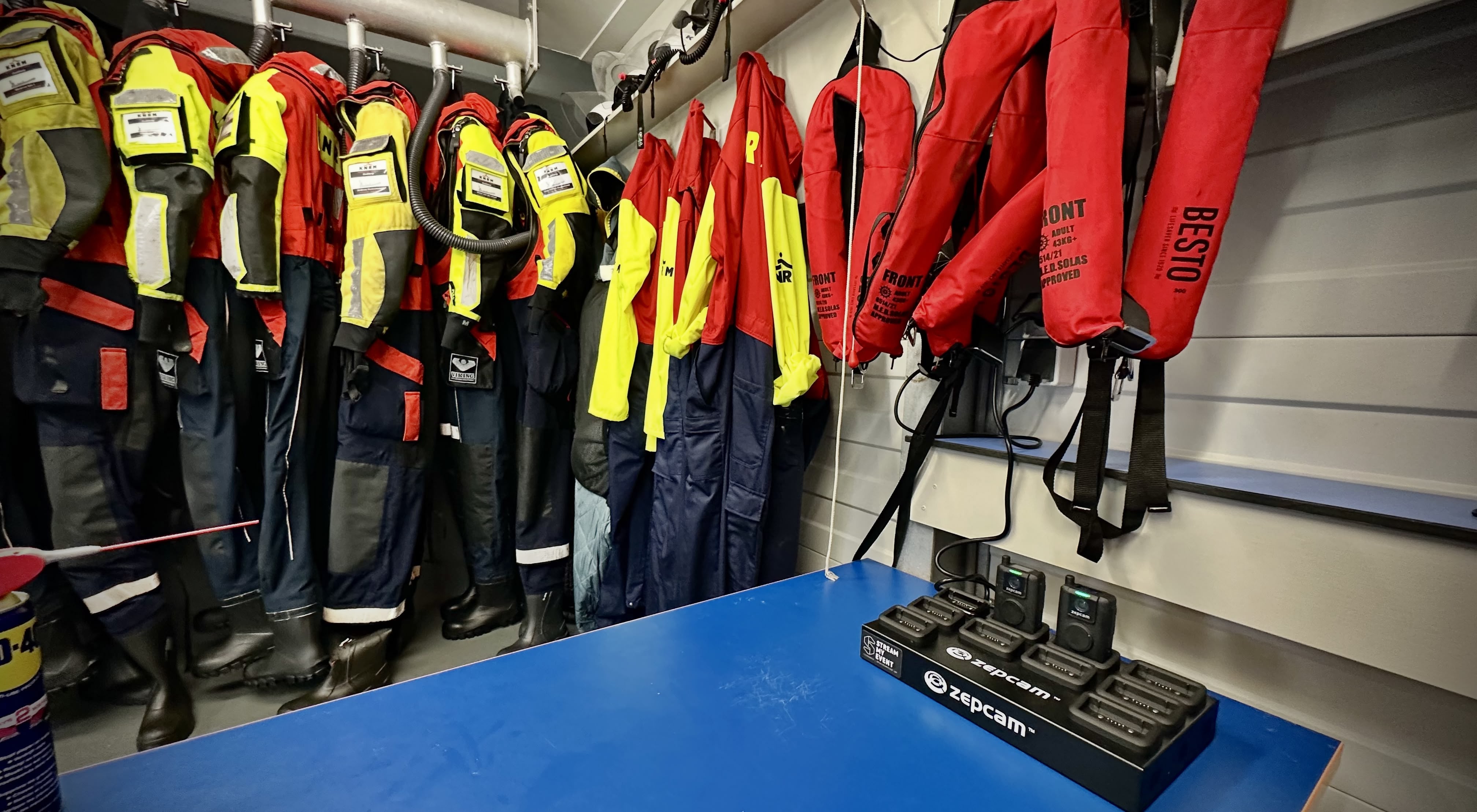
Any station can now raise its own request, every ticket is handled centrally by our team, and when one is resolved, everybody attached to it, station manager included, gets the notification. We also made it easy to start: there's a QR code mounted right where the crews keep their suits and grab a camera on the way out, so reporting a problem takes one scan. It's a small thing, and it has made the whole operation far easier to run.
October 2025: the Eva Schulte
On the night of 4 October 2025, the Eva Schulte, a 145-metre chemical tanker carrying fuel oil, lost engine power about 37 kilometres west of IJmuiden and began drifting toward the Hollandse Kust Zuid wind farm, the largest offshore wind farm in the country. In a Force 8 storm, with waves of around six metres and 21 crew aboard, the ship came within roughly a kilometre of the turbines before a towline could be secured.
The KNRM went out into that weather. Working alongside the Coast Guard's emergency tug, the crew helped connect a towline between the tug and the tanker, and the ship was pulled clear and held steady through the night until its engine was repaired. No injuries, no spill.
The whole action was recorded on the bodycams, and with the KNRM's permission we can share some of that footage here.
Why footage like this is worth the effort
It's fair to ask why any organisation would go to this much trouble to record its own work, and we've answered the question on plenty of projects before. For a service like the KNRM, the reason is easy to see.
This is a volunteer organisation that runs entirely on the goodwill of its donors, and it has an extraordinary story to tell. What it can't do is stage that story. You can't schedule a rescue, ask the sea for a second take, or send a film crew along on a call-out. The only honest way to tell it is to capture it as it happens, without staging or retakes. That matches what we've found on other difficult projects, including the World Solar Challenge and The Ocean Cleanup: people respond to the real, slightly rough footage far more than to anything polished. Seeing the thing actually happen is what counts.
What's next
For now, the job is to build the archive: reliable, and growing with every action. The KNRM has plans to use this footage to tell the story of the organisation, and it's a story worth telling. Those plans are still taking shape, so we'll keep the details to ourselves for the moment. There's something in the pipeline, and it'll be worth the wait.
In the meantime, the system does what we built it to do. It records rescues as they happen, anywhere in the country, without ever getting in the way of the people doing the actual saving.